MITHANDIR
Software for beverage distributors: Vinesco’s whole system, end to end
Vinesco, a beverage distributor in Rosario: from WhatsApp to the dashboard in one system. An order is entered in 20 s and invoiced in 7 minutes, not 3 hours.

- Payment from Almacén Sur
- Photo: bank transfer
- $182,400
- Ref. 00451873 · 10/27
- Customer
- Almacén Sur
- Method
- Bank transfer
- Amount
- $182,400read from the photo
- Reference
- Ref. 00451873not entered before
- 01 / 04The salesperson forwards the photo of the transfer, as always.
- 02 / 04The system reads the amount, date and reference from the photo.
- 03 / 04It checks the receipt isn’t already entered: nothing goes in twice.
- 04 / 04Administration confirms it and it’s reconciled on the customer’s account.
The case on video, explained.
Go to the questions ↓A distributor’s whole system, from what comes in over WhatsApp to the dashboard
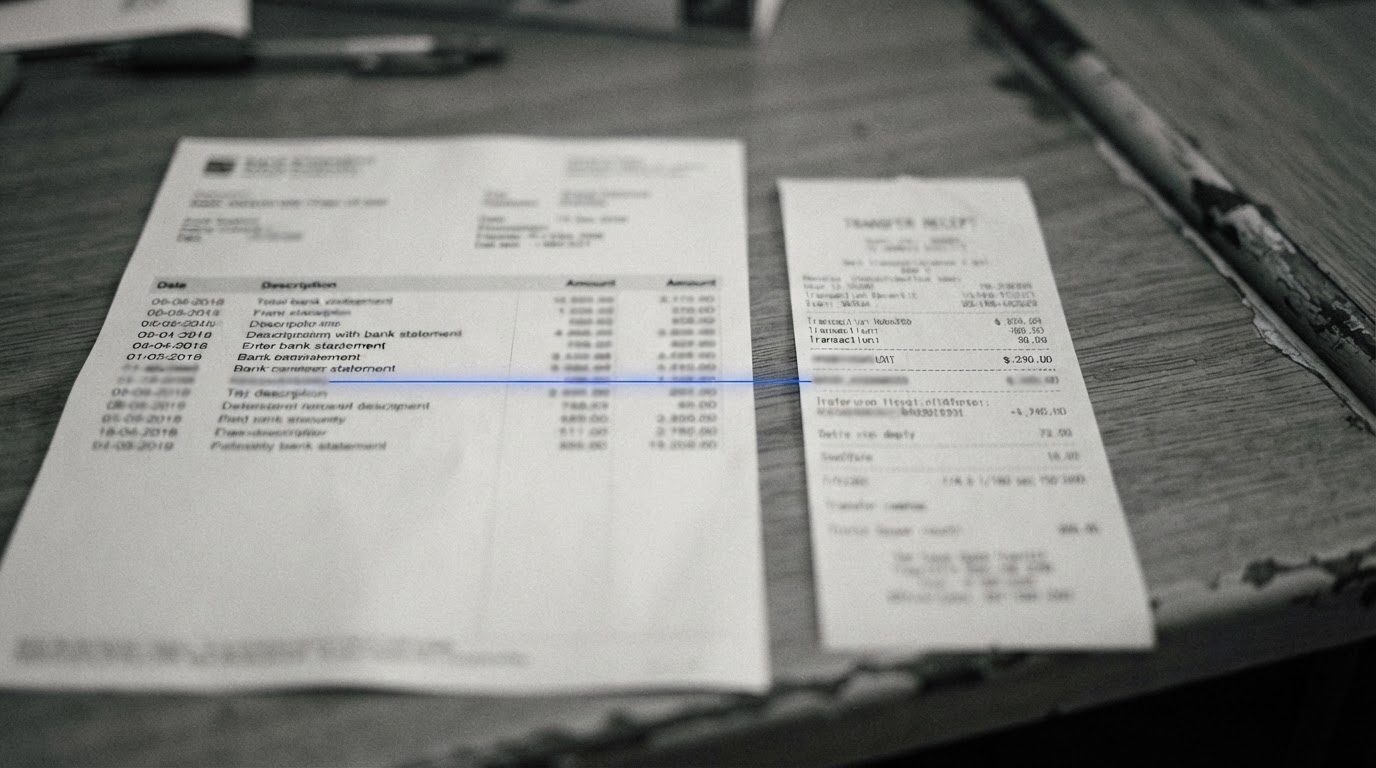
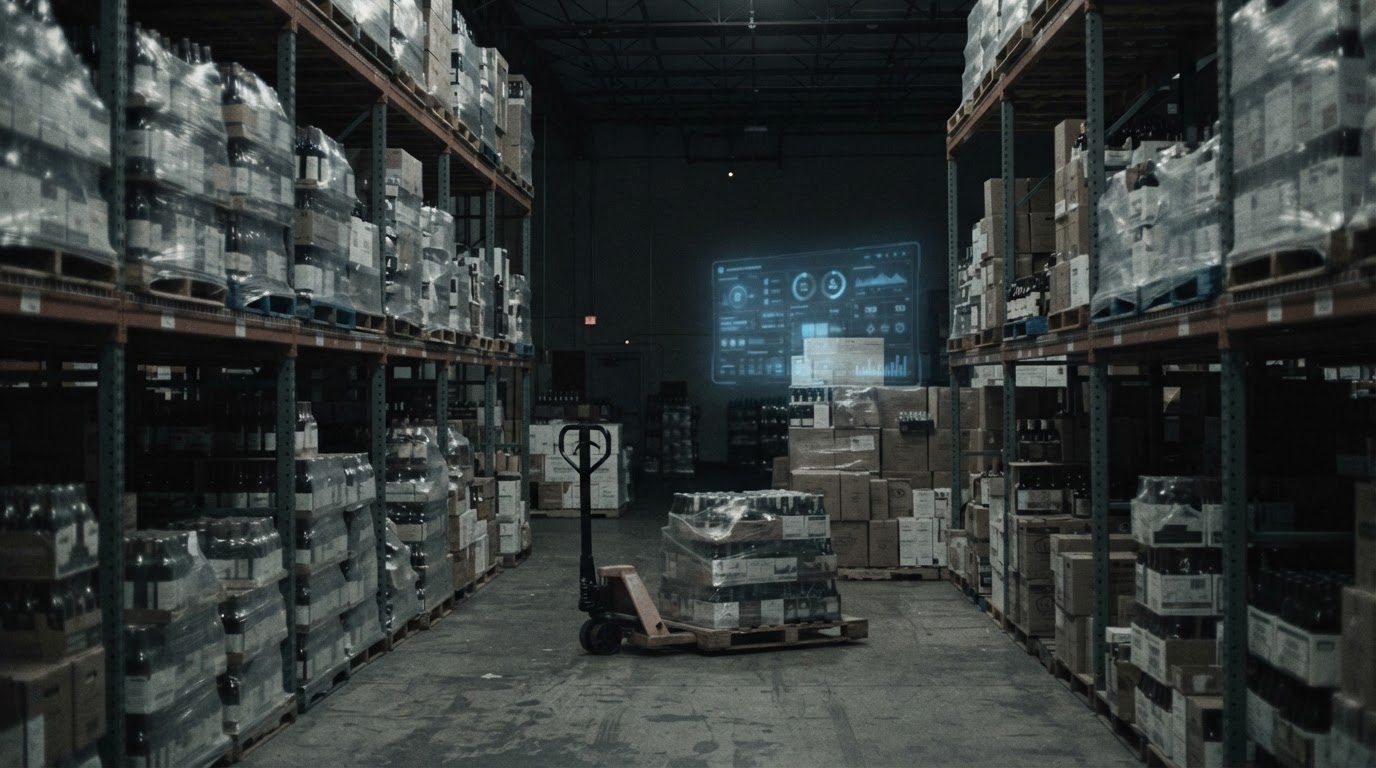
Software for a beverage distributor doesn’t end at the order. Vinesco is a wholesaler of wines, spirits, aperitifs, soft drinks and beers in Rosario, Argentina: it sells to bars, restaurants and stores, runs its own wine shop and three warehouses. Orders, photos of bank transfers, PDFs with e-checks, supplier invoices and warehouse transfers all came in over WhatsApp, to the same group. Administration retyped it, reconciled once a week, and what was happening in the business was known at month’s end, from spreadsheets. Today daily operations are entered automatically and everything is visible in real time. An order is entered in 20 seconds and invoiced in 7 minutes, when it used to take 1 to 3 hours. This case walks through the system module by module, role by role, against a distributor that still works the old way.
 Generated image
 Generated image
- Salespeople
- Forward the message to the group
- The same: they forward it to a bot
- Entering an order
- About 5 minutes
- About 20 seconds
- From order to invoice
- 1 to 3 hours
- 7 minutes
- A payment
- 7–8 min; reconciled weekly
- 20 s, reconciled on its own
- Supplier agreements
- By eye; the credit note, if it comes
- Checked and claimed for you
- A supplier invoice
- 25 min, and costs by hand
- A photo, and it enters itself
- A report
- 2 days
- Instantly, on the dashboard
Administration retyped what had already arrived in writing
Salespeople forwarded everything to the same WhatsApp group, where the day was organized and messages got crossed: orders with “cj”, “pk” and “pl” for cases, packs and trays, deals like “5 cj + 1 cj”, photos of transfers, PDFs with checks. Someone in administration read each one and typed it in: about 5 minutes per order, and 1 to 3 hours went by between arriving and being invoiced. Payments were worse. Every transfer went into a spreadsheet so it wouldn’t be entered twice, then onto the customer’s account, and reconciliation happened once a week: data got lost along the way. Transfers were sent all together, and every supplier invoice meant 25 minutes of typing, plus four hours a week updating costs. Knowing how the business was doing meant waiting two days for a report.
- Bar La Esquina
Saturday
6 fernet 750
3 pk cola 1500
1 cj malbec - Photo · Receipt
- PDFE-checksseveral checks in one PDF
- Photo · A supplier invoice
- TRANSFER
north warehouse → central
8 cases - Photo · Receipt
- 8:12 · Text Type the order and convert packs into units
- 8:40 · Receipt Write it in the spreadsheet, then on the account
- 9:15 · PDF Enter each check with its bank and date
- 9:50 · Photo Type in the invoice and update costs
- 10:18 · Text Note the transfer and send it with the rest
- 10:55 · Receipt Enter the payment and the withholding
All to the same group, crossed, and in the same hands.
Salespeople work the same way: the system does the rest
Salespeople do nothing new: they keep forwarding their customers’ messages, but to a bot instead of the group. The system works out whether it’s an order, a payment, a transfer or a supplier invoice; it reads it, converts packs into units with the size on file and builds the document. A receipt already entered doesn’t go in again, and nothing goes out on its own: administration confirms it and only then is it recorded. Everything lands in the same database, and from there management sees finance, salespeople and stock in real time, and the reports that used to take two days are instant.
- Receives The forwarded message: text, photo or PDF.
- Sorts Order, payment, transfer or invoice, by its shape.
- Reads and builds Packs into units; amount, date and reference from the photo.
- A person confirms Administration, in a single inbox.
- Records and shows Once, and on the dashboard right away.
The main modules: how long each thing took and how long it takes now
Orders, payments, supplier invoices and agreements are administration’s day to day. Each module takes something that used to be done by hand, leaves it built for a person to confirm and records it once. On the right, the work hours saved each month in each one.
Supplier agreements and credit: where the money is made
At a beverage distributor, a good part of the margin isn’t in the price: it’s in the supplier agreements. Bonuses, discounts and monthly promotions the supplier grants afterwards, with credit notes, and always with limits per customer, per channel and per month. If nobody controls them, you sell past the limit, the credit note never comes or comes short, and you don’t know where you’re actually making money. Today each agreement is entered once. On invoicing, it applies itself and checks the limit; going over stops the order until someone approves it. At month’s end, the system builds what to claim from each supplier and matches it against the credit note that arrives. That shows the real margin of each product, agreements included.
What else the system does, and what it saves
On top of what gets entered, the platform builds what used to be month-end spreadsheets, up to date and for each role. Hours are the ones saved each month. Role-based agents (purchasing, finance, sales and agreements) also run on the same database; they have their own case study.
- 39 hPurchasingThe suggested order for each supplier, with the last purchase price and the current agreement. It used to be worked out in a spreadsheet.
- 42 hChecks and financeThe check and e-check calendar, the day-by-day cash projection, the month-by-month VAT position and the withholding files for the tax agency.
- 32 hManagement reportsWhat used to be a two-day report is now instant on the dashboard.
- 16 hSalespeopleEach customer’s commission with late fees, and each salesperson’s account. An estimated 10% fewer losses from selling to overdue customers, and collection speeds up by 30%.
- 13 hWarehouse transfersBefore, about 4 minutes each and all sent together. Now they happen on their own, in about 5 seconds, and enter the system as soon as they’re made.
What changed in administration
Administration stopped typing and started confirming; management decides with the day’s numbers. The math adds up the hours saved in each module, before versus now.
Orders 55 h, payments 65, agreements 60, supplier invoices 47, finance 42, purchasing 39, reports 32, salespeople 16 and transfers 13.
Before, 1 to 3 hours: the order waited in the group until someone typed it in.
Before, about 5 minutes an order and 7 or 8 a payment, which was also reconciled weekly.
With commission tied to each customer’s late payments and a monthly statistic estimated to save 10% in losses from selling to overdue customers.
How the business was surveyed and each feature shipped
There was no requirements document at the start: the business was surveyed along the way, sitting with the people who run it. In October 2025, at the distributor, we started with what was typed in the most: payment receipts and orders. In February 2026 salespeople started sending test orders and we pinned down how they write (“cj”, “pk”, “5 + 1” deals). In May the owners decided to go for a system of their own, and each area recorded voice notes on how it works: purchasing, sales and treasury. With that we built a mock-up and went over it for three hours in June: roles, each customer’s salesperson and supplier agreements. From then on, each feature shipped once it had real data behind it: commission per customer in August, the VAT position and withholding files in early October, and then the cash projection and each salesperson’s account. Since October, a weekly session walks through the system module by module with administration and the owners.
- 17 oct 2025 At the distributor: receipts, reconciliation and orders
- 5 nov 2025 Receipts and orders over WhatsApp
- 11 feb 2026 How salespeople write: “cj”, “pk”, “5 + 1”
- 22 may 2026 A system of its own; each area records how it works
- 4 jun 2026 Three hours on the mock-up: roles, salespeople, agreements
- 2 jul 2026 At the warehouse: supplier agreements and real margin
- 27 jul 2026 Dashboard with real data every 5 minutes
- aug 2026 Automatic entry: a person confirms every document
- 26 aug 2026 Commission per customer, not per salesperson
- 1 oct 2026 VAT position and withholding files
- 6 oct 2026 Dashboard with up-to-date metrics
- 7 oct 2026 Weekly sessions, module by module
- oct 2026 From order to invoice in 7 minutes
- Next Moving to its own system in three stages, with a way back until the last one
What using it made us change
The system was fine-tuned in operation, with administration and the salespeople. Every change is dated, with what happened and what we did. The rule never changed: the system proposes and a person confirms.
- Rev. 01 · 27 apr 2026 An order of water packs went in with half the units. →The next day, every case, pack or tray reads its units from the system.
- Rev. 02 · 5 may 2026 Salespeople wrote “fernet” without the size. →Administration set the rule, no size means one liter, and the system applies it on its own.
- Rev. 03 · 12 aug 2026 An error one morning was only found out at noon. →Every 15 minutes, the system gathers what failed and alerts in a single message.
- Rev. 04 · 29 sep 2026 A PDF with several e-checks couldn’t be entered. →Fixed that day: one payment per check, by number, amount and tax ID, and duplicates are discarded.
- Rev. 05 · 30 sep 2026 Withholdings were still entered by hand. →Payments with withholdings are entered automatically too.
- Rev. 06 · 12 oct 2026 A supplier approved a discount with case limits per customer, starting on Monday. →It was set up that night: the system enforces the limits from the first order.

Under the hood: a WhatsApp, a platform and a database
A WhatsApp, a platform and a database, built for its own operation. What used to be a chat, a spreadsheet and someone copying is now a row: every document with its status, who confirmed it and its history.
- A chat photo of a transfer
- A spreadsheet
- Someone copying Payment $182,400
- Status
- Reconciled
- Confirmed by
- Administration
- Took
- 20 seconds
- History
- 10:41 photo arrived
- 10:41 read, no duplicate
- 10:42 confirmed
Answer and we’ll tell you if this works for your company.
We review it quickly. If it’s a fit, we set up a meeting.
Five questions to see whether your distribution company has the same problem. It takes under a minute.
You have the same problem they had
Pick a time, and in 30 minutes we'll show you how it would work with your orders and your system.

Looking for open times…
Alfonso already has your answers and will write to set a time.
We couldn't save your answers. Send them over WhatsApp and we'll reply all the same:
Send on WhatsAppThanks, we have what we need
We'll write to you within one business day with a concrete idea for your case.
We couldn't save your answers. Send them over WhatsApp and we'll reply all the same:
Send on WhatsAppThanks for telling us
Meanwhile, see how we solved it at two distributors, step by step.
We couldn't save your answers. Send them over WhatsApp and we'll reply all the same:
Send on WhatsAppGive us three numbers and we'll tell you how many hours a week your team spends entering orders by hand.
Those hours can be recovered
Pick a time, and in 30 minutes we'll show you how it would work with your orders, your volume and your system.
Looking for open times…
Alfonso already has your answers and will write to set a time.
We couldn't save your answers. Send them over WhatsApp and we'll reply all the same:
Send on WhatsAppThanks, we have your numbers
We'll write to you within one business day with an estimate of how much manual entry can be removed.
We couldn't save your answers. Send them over WhatsApp and we'll reply all the same:
Send on WhatsAppThanks for telling us
When the time comes, here's how two distributors solved it, step by step.
We couldn't save your answers. Send them over WhatsApp and we'll reply all the same:
Send on WhatsAppRather talk now? Message us on WhatsApp