MITHANDIR
AI appointment agent for clinics: the receptionist who never misses a day
AI appointment agent for clinics: physiotherapist Federico Colella stopped spending 4 hours a day on scheduling, and his no-shows fell from 10–15% to zero.
- Thu 4:00 pm Laura · deposit paidOpen for others
- Thu 5:00 pm Pablo · standing slot
- Fri 11:30 am Open
- Fri 3:00 pm Ana · online, paid
- Fri 5:00 pm Open for othersLaura · deposit moved
- 01 / 04The system reminds the patient of her appointment, 48 hours ahead.
- 02 / 04She can’t come: she replies right there and the bot offers open slots.
- 03 / 04The appointment moves on its own and the deposit goes with it.
- 04 / 04The physiotherapist never touched the phone, and Thursday is open for someone else.
The case on video, explained.
Go to the questions ↓The physiotherapist was working as his own receptionist
Federico Colella is a sports physiotherapist in Rosario, Argentina. He has his own practice and sees patients in person and online, including patients who live in other countries. He booked appointments through a Google Calendar link and handled everything else over WhatsApp, by hand: confirming, reminding, rescheduling, cancelling and collecting the deposit. He did it himself, between patients. We built him an AI agent for the practice’s appointments: an online booking system with deposits, a WhatsApp bot for patients and a panel for him. Today it does a full receptionist’s job. Federico no longer spends about 4 hours a day on scheduling, no-shows went from 10–15% to zero and the practice saves USD 1,000 a month in salaries. And the calendar filled up: from 14 appointments in February to more than 220 a month, and today it has even more than at the start. Before designing anything, we looked at where his day went:
- Slots that got booked and nobody came
- Booking cost nothing, and neither did skipping. Between 10 and 15% of appointments were lost.
- Changes that scrambled his day
- Patients moved their own times, with no rules and no notice.
- Times shown in another time zone
- For patients abroad, the calendar showed times that weren’t the practice’s.
- Deposits by bank transfer, tracked from memory
- Collecting, checking and noting who had paid was one more task.
A day on the practice’s WhatsApp, without a system
Every message was a receptionist’s task: check the calendar and reply, find the deposit receipt, find another slot for whoever couldn’t make it, explain the time to the patient abroad. If Federico was running late, he told everyone one by one. And if someone didn’t show up, the slot was lost, because nobody found out in time to give it to someone else. In a traditional practice that work is done by a receptionist, on a salary. In a small one it’s done by the practitioner, between sessions: “if I have to cancel, my hands are tied”, Federico said when we started.
- Hi! Any slot
tomorrow afternoon? - Photo · Receipt
- Can’t make Thursday 😕
Can we move it? - Is 10 am my time
or Argentina’s? - Running 15 min late
- 6 pm slot:
nobody came
- 8:10 · Text Check the calendar and reply
- 9:35 · Receipt Check the payment and note who paid
- 11:20 · Text Find another slot and reschedule
- 13:40 · Text Explain the time to the patient abroad
- 15:05 · Text Tell each patient of the day, one by one
- 18:00 · Text A lost slot nobody could fill
All of that is a receptionist’s job. The physiotherapist did it, between patients.
A traditional practice and Colella’s
This is how a practice with a receptionist compares with Federico’s, where the system does that job. The calendar is the same; what changes is who runs it, and when. At a traditional practice the receptionist works office hours: whatever comes in at night or over the weekend waits until Monday, and a slot dropped at the last minute is lost. Deposits are checked by hand, reminders depend on someone remembering and, if the practitioner runs late, someone has to call every patient. At Colella’s, patients book and pay on their own, whenever they like; the reminder goes out by itself, with a way to change the appointment; and a freed slot goes back on the calendar right away. Federico does the same as before: treat patients. But without a receptionist’s salary and without patients skipping without notice.
- Who books appointments
- The receptionist, during office hours
- The website, any time, against the real calendar
- The deposit
- A transfer, noted by hand
- Mercado Pago when booking; the slot is confirmed
- Reminders
- A call, if there’s time
- Three on WhatsApp: 48, 26 and 4 hours before
- If the patient can’t come
- Calls, or just doesn’t show
- Replies to the reminder and picks another time
- If the practitioner runs late
- Call each patient
- One button: the system tells everyone
- What the practitioner does
- Treat patients
- Treat patients
- No-shows and cost
- 10–15% no-shows and a salary
- Zero no-shows and USD 1,000 less a month
The practice’s rules, the same at 3 pm and at 3 am
Patients book on the website, leave a deposit and get their reminders on WhatsApp. And they reschedule or cancel on their own, without depending on anyone: if they can’t come, they don’t have to call or wait for an answer, they reply “can’t do Thursday” to the same reminder or go to “My account” on the website. The bot understands text and voice notes, offers the open slots, moves the appointment, carries the deposit over and frees the slot. If they cancel in time, the deposit goes back to their account on its own. The rules aren’t up to the AI. Dates, windows and refunds are enforced by the system, and the bot can only do what those rules allow. It doesn’t diagnose either, never gives out the practitioner’s personal number and, if a patient asks for a person, it steps aside.
- 01New bookings only on the website, with a deposit
- 02Cancel more than 24 h ahead: the deposit is refunded automatically
- 03Within 24 h: move it within the same day, or lose the deposit
- 04In person: deposit when booking, the rest at the practice
- 05Online: paid in full, with its video call link
- 06Half-hour or one-hour session
- 07Times in the patient’s local time
Who does what: the patient, the bot, the physiotherapist and the system
The receptionist’s job got split up. Patients do on their own what they used to ask for by message, the bot answers and handles, and the system does what nobody has to remember to do. Federico sees it all in his panel and only steps in if he wants to. Each one sees what concerns them. Patients sign in to “My account” and see their appointments and files. The bot sees open times and the rules, but decides nothing outside them. Federico sees the day, the money and the records. And on the website, an assistant answers prices, hours and FAQs for anyone who drops by, without seeing any patient’s data. If a patient asks for a person, or the conversation gets stuck, the bot steps aside and hands it to Federico, who can reply himself from the panel.
The job it replaces: the practice’s receptionist.
Why the practice’s no-shows dropped to zero
It wasn’t the chatbot alone. It was two things that hold each other up. The deposit, which gives the patient skin in the game. And moving an appointment became easier than skipping it. Whoever can’t come lets them know, the slot goes back on the calendar and another patient takes it. No-shows turned into cancellations with notice: in the first three and a half months, 17 in 578 appointments.
 Generated image 1Thu 4 pm · open again 2Fri 5 pm · with deposit 3Someone else takes the slot
- 1Thu 4 pm · open again
- 2Fri 5 pm · with deposit
- 3Someone else takes the slot
The physiotherapist’s panel: the day laid out and every payment matched to its slot
At first Federico heard about everything through a Telegram bot. Since August 2026 he has his own panel, which installs on his phone. In “Today” he sees the day’s appointments, taps “Paid” or “No-show” and, if he’s running late, presses “Running late”: the system tells every patient that day. In the calendar he blocks a day or a time range, and the system cancels, refunds and notifies everyone affected. Every patient has a record, with their sessions, files, clinical notes and the conversation with the bot. Mercado Pago payments match themselves to their appointment and the balance stays on the patient’s account; if something is owed, it’s claimed over WhatsApp with one button. And in stats, month by month, no-shows, income, occupancy and how many patients come back.
- A WhatsApp chat can we do Friday?
- A calendar
- Him, taking notes Laura: paid?
- Status
- Confirmed
- Deposit
- Paid · Mercado Pago
- Record
- 2 files · notes
- History
- Tue 9:02 booked online
- Wed 2:10 pm 48 h reminder
- Wed 2:12 pm moved Thu → Fri
What runs on its own, without anyone remembering
What depends on the receptionist’s memory at a traditional practice, the system does here on schedule. Messages only go out between 7 am and 9 pm: anything due overnight goes out in the morning.
- On paymentWhatsApp confirmation, the calendar event and, for online sessions, the video call link.
- After the sessionA survey every 5 sessions, without anyone having to ask.
- Standing slotsThe weekly slot books itself, with its exceptions, and syncs with the practitioner’s Google Calendar.
- RefundsIf the patient cancels in time or the practitioner blocks a day, the deposit goes back on its own through Mercado Pago.
- Last-minute bookingsThose booked late still get their reminder.
- ReviewsWhatsApp campaigns to ask for reviews, moderated before they show on the website.
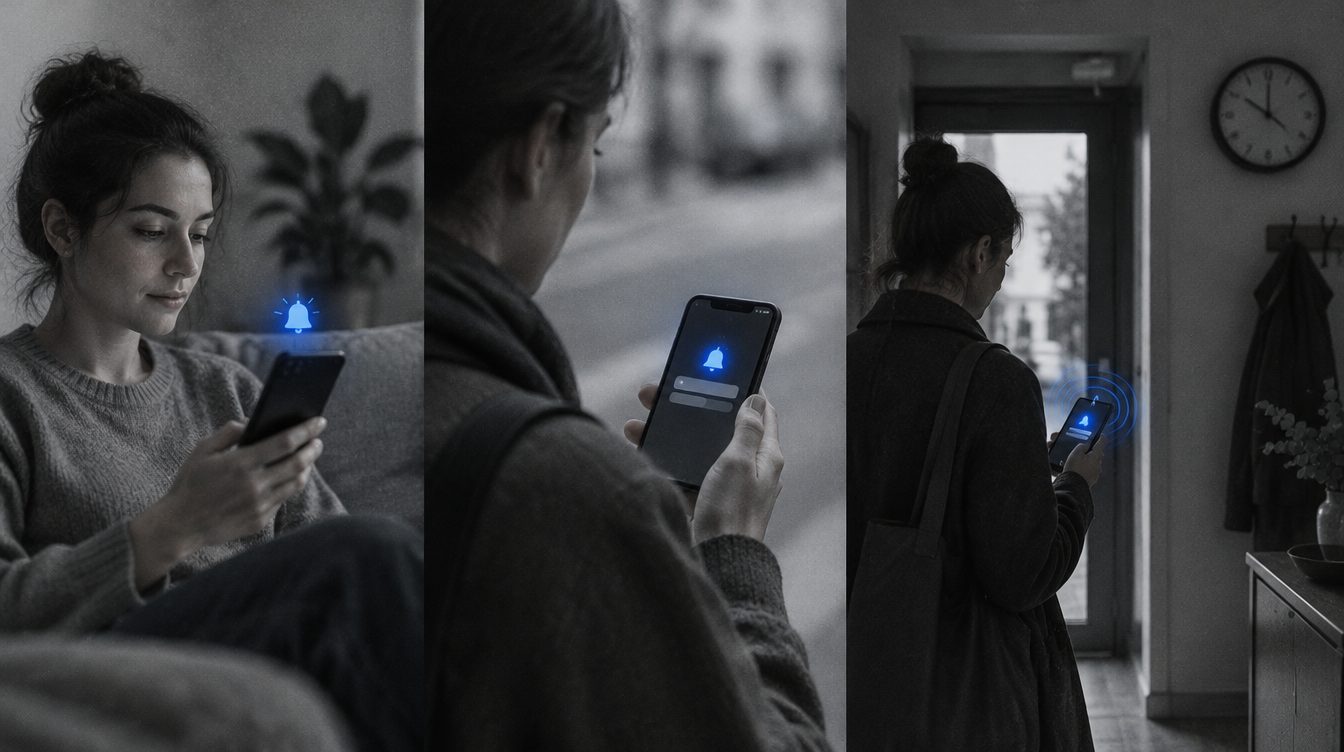 Generated image 148 h · with a way out 226 h · last call 34 h · “see you today”
- 148 h · with a way out
- 226 h · last call
- 34 h · “see you today”
The calendar filled right up
With the calendar open around the clock, the deposit at booking and slots that free up on their own, the practice filled up. In February, the first month, the system booked 14 appointments. In March, with the website open to patients, 112. Since June it’s over 200 a month, and today it has even more than at the start: 226 in September and 223 in October, with the month still running. In total, 1,539 confirmed appointments since February. And nobody else was needed to handle them: what would have been messages, calls and transfers now comes in on its own.
 Generated image 1February · 14 appointments 2July · 233 appointments 31,539 confirmed since February
- 1February · 14 appointments
- 2July · 233 appointments
- 31,539 confirmed since February
How it grew: every request from the practice, a feature
The first version shipped in February 2026 and by March the website was open to patients. What came next grew out of daily use: a patient living in New Zealand, online sessions, standing slots, the one-hour session. In August the system moved to its own platform, with the practitioner’s panel, and it keeps adding what the practice asks for.
- Rev. 01 · mar 2026 The website opens to patients; WhatsApp changes handle themselves →Automatic rescheduling, with the 24-hour rule
- Rev. 02 · apr 2026 A patient in New Zealand saw a different time →Local times, online sessions paid in full and standing slots
- Rev. 03 · may 2026 Patients who needed more time →One-hour sessions and up to 5 files per booking
- Rev. 04 · aug 2026 The practitioner wanted to see and decide without texting a bot →Its own platform, with a panel, records and “Running late”
- Rev. 05 · oct 2026 Knowing how the practice is doing, month by month →Stats on no-shows, income, occupancy and retention
What changed: a whole job, in hours and in money
Hours, no-shows, salary savings and the job replaced are reported by the practice (October 2026). Appointments, patients and messages are counted by the system as of 27 October 2026; the 807 reminders cover the first three and a half months, 18 February to 1 June. Response time comes from patients’ messages: 94% were answered in under 90 seconds.
Confirming, collecting, reminding, moving and notifying: the hours went back to the treatment table.
No-shows became cancellations with notice, and someone else takes the slot.
It’s what the practice no longer spends on a receptionist, every month.
The hours that went into answering WhatsApp, confirming, collecting and moving appointments.
Patients write whenever they like, even at night, and in under a minute and a half they have their answer or their appointment sorted.
From 14 in the first month to over 200 a month since June, and even more today.
Each with the option to reschedule or cancel right there.
They self-serve: they pick a time on the website and pay the deposit via Mercado Pago.
Confirmations, reminders, bot replies, payment details and notices.
My no-show rate went down to zero.
Under the hood: one calendar, and the rules in the code
It started as automations on a server, and in August 2026 it moved to its own Next.js application, with its database on Supabase and deployed on Vercel. The patient’s website, the WhatsApp bot and the practitioner’s panel read from and write to the same calendar; Mercado Pago, Google Calendar and video calls connect from the panel. The bot uses an AI model with narrow tools: it can reschedule and cancel, but dates, the 24-hour rule and refunds are decided by the code, not the model. What used to be a chat, a calendar and someone taking notes is now an appointment with its status, its payment and its history.
- Patient · websiteBooks, pays, attaches files, “My account”
- Patient · WhatsAppReminders, questions, changes and voice notes
- Practitioner · panelThe day, payments, records and stats
- Mercado Pago and CalendarPayments, refunds and synced events
Answer and we’ll tell you if this works for your company.
We review it quickly. If it’s a fit, we set up a meeting.
5 questions, 1 minute. With this we come to the call already knowing how your schedule works today.
Your practice has the same problem we solved
Pick a time with Alfonso. In 30 minutes we'll show you how it would look with your rules: your deposit, your hours and your cancellation policy.

Looking for open times…
Alfonso already has your answers and will write to set a time.
We couldn't save your answers. Send them over WhatsApp and we'll reply all the same:
Send on WhatsAppThanks, we have what we need
We'll write to you within one business day with a concrete idea for your schedule. If you'd rather talk sooner, message us on WhatsApp.
We couldn't save your answers. Send them over WhatsApp and we'll reply all the same:
Send on WhatsAppThanks for answering
Here's the full case, in case it's useful later.
We couldn't save your answers. Send them over WhatsApp and we'll reply all the same:
Send on WhatsApp8 questions, 2 minutes. At the end we'll tell you how many hours a week go into coordinating appointments.
Those hours can be won back
Pick a time with Alfonso. We'll come with your numbers and show you how your schedule would look with deposits, reminders and WhatsApp rescheduling.
Looking for open times…
Alfonso already has your answers and will write to set a time.
We couldn't save your answers. Send them over WhatsApp and we'll reply all the same:
Send on WhatsAppThanks, we have your numbers
We'll write within one business day with a concrete idea for your practice. If you'd rather talk sooner, message us on WhatsApp.
We couldn't save your answers. Send them over WhatsApp and we'll reply all the same:
Send on WhatsAppThanks for answering
Here's the full case, in case it's useful later.
We couldn't save your answers. Send them over WhatsApp and we'll reply all the same:
Send on WhatsAppRather talk now? Message us on WhatsApp